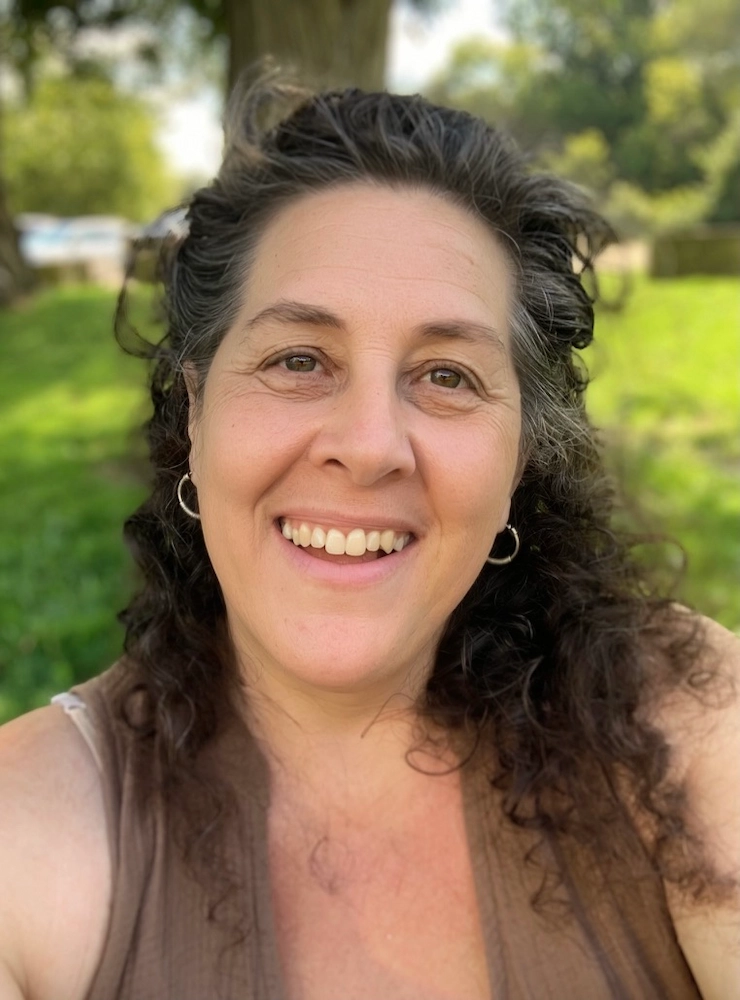
I've spent twenty-four years living and breathing the five biological laws. For a lot of that time I could explain the mechanics — the conflict, the program, the phases — without being able to say, in one breath, what it all comes back to. In this conversation, I get straight to it.
The root is existential isolation. The experience of being away from home, severed from the source of your own being. Strip any biological conflict down far enough and you find that same fracture at the base of it. Cancer is downstream. Symptoms are downstream. The isolation is the thing.
A few of the threads we pull on in this conversation:
The MindTree. My made-up word for the stacked, branching architecture of unresolved psyche material. As Carl Jung put it: until you make the unconscious conscious, it will run your life and you will call it fate. Every symptom, every pattern, is nuance and outgrowth of that severance from the source of your existence. And you do it all in your own unconscious mind.
The identity conflict — the (feminine) wound of not belonging. The experience of being kicked out of the container, the terror of being the bad guy, the compulsion to abandon your own goal post and rescue everyone else. Nearly universal in women, and increasingly universal in men.
Sadly, we took determinism into GNM and into the truther movement. Discovering the five biological laws was supposed to free us from fear. Instead, we carried the victim-villain-rescuer drama straight into the framework — micromanaging tracks, fearing the epicrisis, terrified of resolving a conflict the "wrong" way. Same fear, new costume.
Tough love and the era of weak men. Good times made weak men, and weak men raised weaker children. I'm sad to say it, but when it's out there, we can do something about it.
Cancer screening as a conflict factory. In 1913, when the Cancer Society was founded, roughly 1 in 8,000 people were diagnosed. Today it's about 1 in 3. The math doesn't say screening saves lives so much as it increases the rates of diagnosis ...and that's what correlates with rates of morbidity and mortality.
Self-esteem is the exit. Nathaniel Branden, in The Six Pillars of Self-Esteem, defined self-esteem as the disposition to experience oneself as being competent to cope with the basic challenges of life and of being worthy of happiness. Hold that beside existential isolation — that awful feeling that you are separate and alone and need to handle the entire universe by yourself — and you can see they're the same fracture, viewed from opposite sides. Joel and Yerasimos built the Self-Esteem Reset, a free seven-day mini course, and it takes on this fracture head-on.
Down syndrome as teacher. My son is the curriculum I didn't choose but would never trade. Twenty-two years of re-learning that life is meaningful because the individuals living it want to be alive, not because of what anyone else has to say about it.
And underneath all of this is the one question I return to whenever we get lost in conflict: who do I want to be?
Go support Here for the Truth — a podcast and community oriented around the work of knowing who you actually are: the show lives at hereforthetruth.com and on YouTube, Spotify, Apple Podcasts, and Instagram; their deeper program is Rise Above the Herd; and the original conversation is their Episode 292.